Truancy
I'd Like to Apologize to Every Teacher I Ever HadTruancy at Northeast High School is more than absence from the building: students may reach campus, swipe in, and still spend the day avoiding class. The book presents it as a daily contest over attendance and engagement, one that falls partly to administrators and teachers to enforce and partly to students to answer. Its most sustained example is Phil, whose pattern of roaming rather than attending lessons turns school absence into academic failure and places his chances of returning to education under severe pressure.
Forms of Absence and Avoidance
The school’s attendance problem is visible from the first hour of the day. On truancy duty, Tony Danza is assigned to circle the campus, confront late-arriving students and parents, and escort students who are dawdling. The task is not a one-time response: he is expected to work with assistant principal Ms. DeNaples every morning for the rest of that week and periodically through the year. Her insistence that tardiness is serious makes clear that attendance is treated as an administrative responsibility, not simply a classroom preference.
The patrol reveals how unevenly students respond to the bell. Although class has begun, many remain outside: some hurry toward lessons, smokers gather in a side alley off Algon Street, and a group walking away from school turns back only after Danza calls them out. Their eventual arrival that day offers no assurance that they will come tomorrow. A battered Volkswagen Beetle brings another student twenty minutes late, prompting Danza to challenge the parent as well as the child. The scene shows the school trying to hold families accountable, while also exposing the limits of a brief intervention: getting a student through the door does not establish a lasting pattern of attendance.
A more concealed form of truancy is practiced by the four boys Danza calls the Wanderers. They come to school each morning and swipe their student identification cards to show they are on campus, then roam the large building instead of attending class. Its many nooks and crannies make movement itself a means of evasion; these students know how to stay inside the institution while avoiding its lessons. Their physical presence therefore masks educational absence, complicating any simple measure of whether a student has attended school.
Enforcement and Its Limits
Ms. DeNaples’s patrol is a direct attempt to turn attendance rules into action, but the book places it within a wider school culture where posted policies are not consistently enforced. Before a Washington, D.C., field trip, Danza worries that students accustomed to testing rules will be difficult to supervise on the bus. He describes a system in which behavioral codes are familiar to students, yet teachers may hesitate to involve the dean’s office because doing so consumes class time and disrupts instructional momentum. The account does not equate every discipline problem with truancy; rather, it shows why a rule’s presence on paper cannot by itself ensure compliance.
The school also distinguishes unexcused class-cutting from other reasons a student might not be in a lesson. After the Washington trip, Ms. DeNaples reprimands Danza for failing to notify students’ other teachers that they would miss class. The responsibility for communicating an authorized absence belonged to him, not to the students. This episode makes attendance a matter of coordination as well as enforcement: the institution expects absences to be accounted for, even when the students are away on a school activity.
Nor does being physically present guarantee that a student is learning. In-school suspension places students in a portable classroom at the back of the school, where they sit through a day described as empty and without instruction. That disciplinary setting is distinct from truancy, but it sharpens the book’s concern with the difference between being kept at school and being meaningfully engaged there. The broader pressure to maintain attendance appears again during the Pennsylvania System of School Assessment: Danza notes that students cannot perform well if they are not at school, and good attendance is the first hurdle during the test. Attendance matters both to individual learning and to the institution’s effort to meet its Adequate Yearly Progress target.
Phil and Chronic Class-Cutting
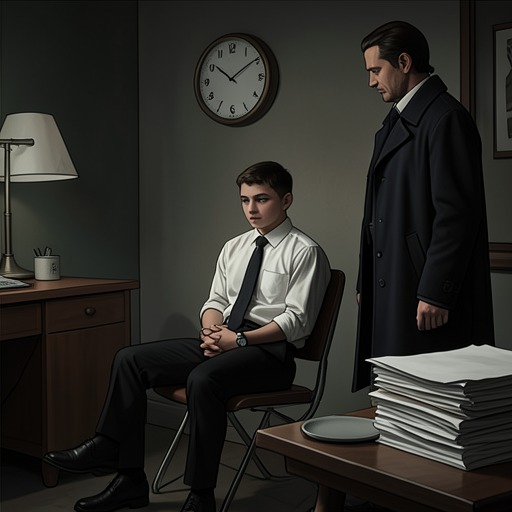
Phil’s case gives the attendance problem its most personal stakes. Sixteen years old and one of the four Wanderers, he has a fatherless household, a mother raising him alone, and older brothers who have been in trouble. When Danza asks what his father thinks about his skipping class, Phil responds by challenging the assumption that a warning alone can alter his circumstances. Danza sees a student who may be confused rather than simply bad and decides to try to help.
Phil begins coming to Danza’s classroom at lunchtime, where he receives half a sandwich and gradually talks with him. Danza obtains Phil’s course roster and visits his teachers, learning that Phil is failing every course because he does not attend. One teacher reports that Phil has cut class every day since school began; another says he has more than sixty unexcused absences and that his teachers have nearly given up on him. The figures turn an apparently casual habit of wandering into a record of sustained disconnection, with consequences across the whole school day.
Danza asks Phil’s teachers to provide the missing assignments and promises to help him complete them, even though doing so creates extra work for teachers already responsible for many students. Their willingness to give Danza and Phil the benefit of the doubt offers a limited opening: the response to truancy can include academic recovery and renewed contact, not only punishment. Danza tries to persuade Phil that his teachers care and that changing his behavior matters. Yet the effort does not prevent a sharp reversal. Phil is charged with credit-card fraud after he and friends use a stolen Visa card, and Danza is shaken by the arrest.
Consequences and the Possibility of Return
The last time Danza sees Phil, the student says he may face a three-year jail sentence and is beginning the Twilight Program, a night school for young people who work or have problems and want a General Educational Development certificate. Danza urges him to treat the program as a last chance and to show the court that he is trying, since earning the certificate may be considered by the judge. Phil acknowledges the appeal, but Danza believes he feels too far behind to catch up and doubts that he will stay in the program. The book does not report a later outcome for Phil; the encounter ends with Danza recognizing both the possibility of another educational route and his inability to make Phil take it.
This unresolved case distinguishes a formal attendance intervention from the harder work of restoring a student’s connection to school. A patrol can call latecomers in from the sidewalk, and a student can be counted as present after swiping an identification card, but neither measure alone brings a student back into lessons. Phil’s daily absences, accumulated failures, and eventual night-school plan show how truancy can become self-reinforcing: missed instruction leaves more work to recover, while the growing backlog makes return seem less attainable. The book’s account therefore treats attendance as a necessary beginning, not proof of learning or a guarantee that support will arrive in time.